Can Philosophy Help Your Career?
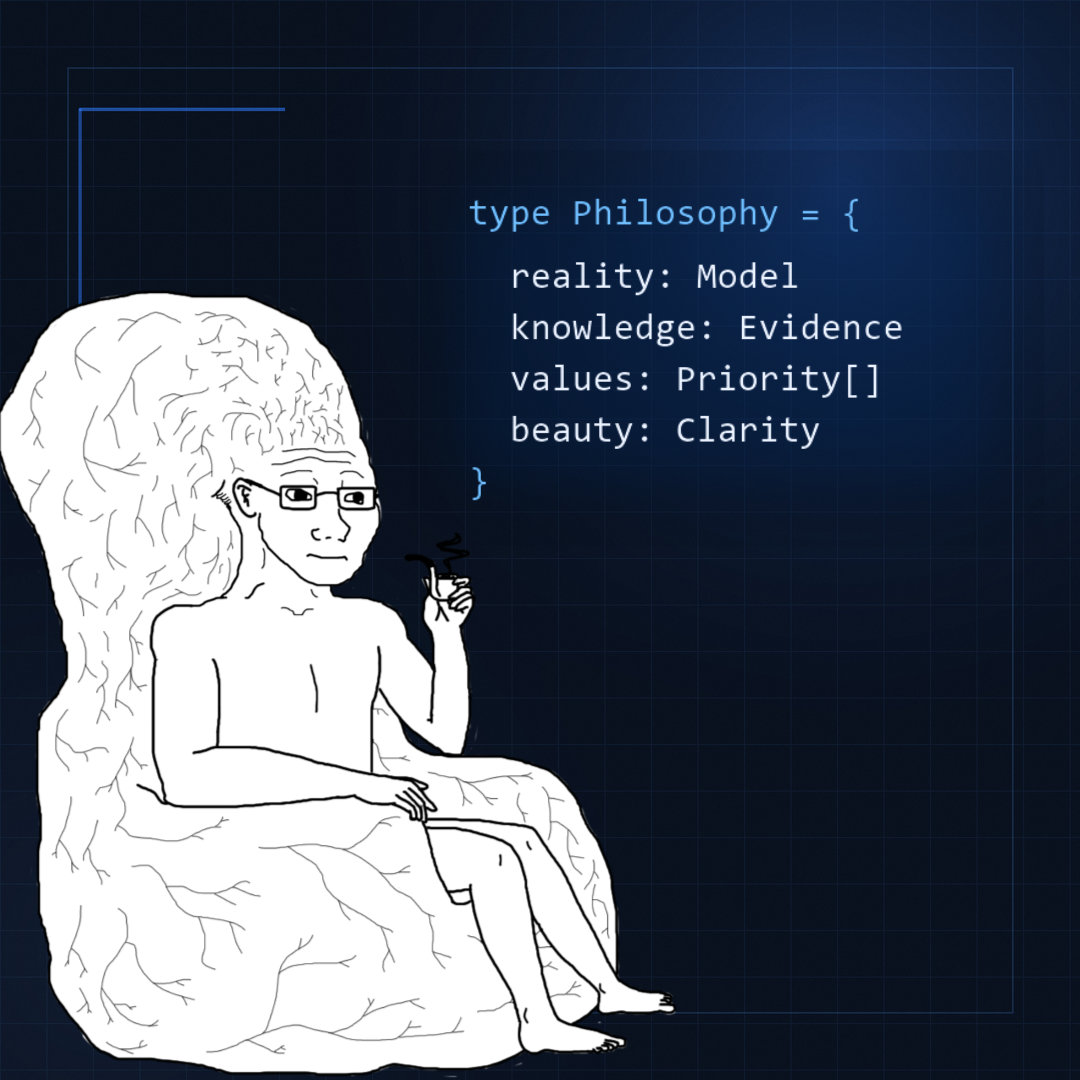
To start the week properly: can philosophy help your career as a developer?
That is a question whose answer may seem obvious to some people.
Other, more sensory or pragmatic profiles may never have asked themselves the question in the first place, and may not necessarily understand why it matters.
Yet, whether we want it or not, each of us interprets and acts according to a philosophy.
What philosophy is really looking for
First, we need to understand what questions the discipline of philosophy tries to answer.
Philosophy is built around four major pillars:
- Metaphysics: understanding the very conception of the world. What is the nature of the universe and of reality?
- Epistemology: understanding knowledge. How do we know what we know?
- Ethics: understanding human flourishing. What should be valued in order to live a good life?
- Aesthetics: understanding beauty. What characterizes beauty?
Philosophy is the attempt to find answers to the broadest possible questions, and to abstract as much as possible.
Thinking at the most abstract scale
We are not trying to understand how atoms work. We are trying to understand the nature of reality itself and the nature of all matter.
We are not trying to know whether the p-value and the population are large enough for a specific statistical study. We are trying to determine whether the method itself is valid. Does it tell us something about reality, and can it become reusable knowledge we can trust?
We are not trying to know whether it is better to eat at a fast-food restaurant or a sushi place tonight. We are trying to know whether simply eating is a desirable action — spoiler: yes.
We are not trying to decide which wallpaper to put on a PC. We are trying to understand what characterizes Beauty.
As you can see from these examples, it is impossible to take even the smallest action without philosophy, because philosophy defines how the world is conceptualized: what you perceive as real, what you understand, what you value, and what the outcome of your choices should look like.
A philosophy always exists, even unconsciously
Every living being has a philosophy encoded within its DNA.
Unlike a stone, to which the concept cannot even apply. A stone does not try to evolve within reality. It does not need to understand reality, it values nothing, and it cannot produce anything. It is a simple passive entity, purely reactive.
Even a plant, which is not the pinnacle of free will, is the result of massive selection and adaptation to reality. A plant unconsciously has a philosophy that guides it to evolve as it is and to resemble what it is.
However, humans, unlike all other living beings in a fundamental way, have the ability to become aware of and conceptualize their philosophy. At runtime, they can update their software and change their behavior.
Becoming aware of your own philosophy
Of course, the vast majority of humans have never made their philosophy conscious.
If you ask them about their metaphysics, epistemology, ethics, and aesthetics, as well as the reasons they adhere to them, they will dodge the question.
You are born with your philosophical “core”, then as you grow up, you adopt the philosophy of your environment and of society.
However, as the diversity of cultures around the world shows, thinkers can conceptualize new philosophies and convince other people, for better or worse.
That philosophy then determines the actions undertaken by these individuals and shapes their civilization, or the absence of one.
You can see the results of different philosophies around the world through the cultural and material differences between nations.
The link with a developer career
As you can see, I went far, but I think you can already see the connection with your career, especially for developers.
A moment ago, I was talking about whether or not people make their philosophy conscious.
Of course it is possible to live your whole life without paying attention to it. Most people do, and they get by very well.
Because deep down, you know what you want, right? Maybe not the extroverted decision-makers, haha.
But do you know why you want it?
The problem with not making your philosophy conscious is that you do not understand how you conceptualize the world, what you believe you know, which values guide your decisions, or what the thing you are trying to build is supposed to look like.
And many philosophies that exist are corrupted and will lead to suffering and self-destruction.
That is why taking time to stop and question yourself can change the direction of your life.
And for engineers of all kinds in particular, this has a major impact.
Philosophy and software architecture
For example, my work as a software engineer consists of architecting information systems to represent a certain reality as accurately as possible and adapt it to real needs.
We try to create classes, interfaces, enums, functions, and abstractions that represent entities, relationships, and actions as clearly as possible.
That is already a form of applied metaphysics and epistemology.
We must also adapt these systems to users’ needs in order to serve their interests as well as possible. That implies values, and therefore ethics.
And we also try to build a codebase that is as beautiful as possible: clear, elegant, efficient, readable, and consistent. We also try to create a good User Experience and Developer Experience.
All of that touches aesthetics: the implementation of an ideal in reality.
A philosophy influences daily work
It also defines your relationship with work on a daily basis.
With a bad philosophy, you value things that go against reality.
That then appears in many day-to-day decisions. And inevitably, in your development and in your relationship with work.
That is normal because, as described at the beginning, philosophy encompasses everything, because it is the greatest abstraction.
Literally everything you perceive immediately passes through the filter of your philosophy.
A good philosophy should lead to a good life. Systematically.
Conclusion
That was a short, more abstract article.
Tell me what you think. Personally, I have always had this slightly intuitive and abstract side, and I am happy to share it.